
A Call From The Future
A conversation with Dallas Payne


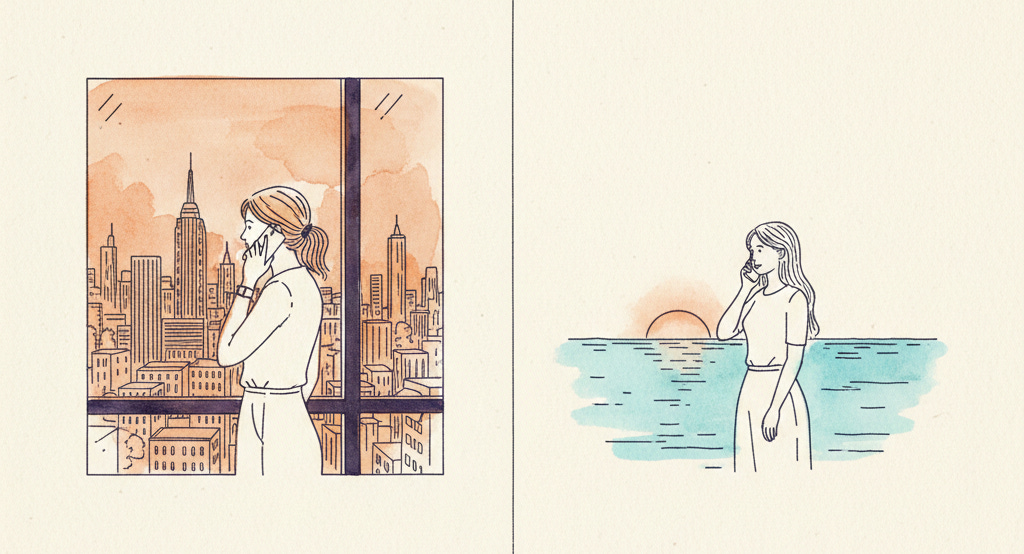
When Dallas called me, it was Friday morning in New Zealand. Thursday evening in New York. She was already in tomorrow.
And in some ways, that’s what this whole conversation was about: a call from the future. From the woman who made it through to the one who almost didn’t.
The difference wasn’t grit or loyalty. It was how long she believed people who told her she was overreacting instead of trusting the part of her that already knew.
Dallas knew she needed to leave. Her body knew. Her mind kept overriding it.
Maybe I just need a better attitude. Maybe if I try harder. Maybe one more conversation will fix it.
I think a lot of us know when the body says go and the mind says stay. We wait for the misalignment to become unbearable before we listen.
This is what it sounds like when someone finally picks up the phone from the other side.
The Breaking Point
Anna: We treat our intuition like a nuisance, but the body keeps a tally. You told me about a phone call in January 2023. That was the real beginning of the end, wasn’t it?
Dallas: About two years ago, I called my boss for a difficult conversation. I told him I was really struggling and asked:
Please, how can we work on this? What can I do? I don’t want to quit my job. I love my clients, I love my work. But this team? I’m not coping in this dynamic at all and it’s breaking me.
We talked for almost two hours. I told him my concerns and issues I had identified.
I knew during this call that the company was a bad fit for me. I just hoped that something would change so I could stay. My boss was very kind at the end of our conversation, said all the right things about how valuable I was and how he appreciated my contribution to the company.
He left me feeling heard and reassured that a plan would be put in place. However, the reality was that he never followed up, never checked in or asked how I was doing. The expectation was to put my head down, focus on the work and not worry about anything else.
I didn’t act on what I knew was going to become an inevitable conclusion sooner or later. I waited a further year and a half until I broke.
It’s going to make me cry.
Anna: That’s okay if you’re okay with it.
I felt this in my bones as she spoke. She did everything right, spoke up, trusted her manager, and was dismissed.
That’s leadership negligence. It’s the softer form of gaslighting: you’re reassured, praised, told you’re valuable, then quietly ignored until you start to wonder if you imagined the whole thing.
The Interest Rate
Anna: What did you tell yourself during those years?
Dallas: I thought maybe I needed a better attitude. Maybe if I just had one more conversation, used the right words, everything would change. I convinced myself that I had to prove my worth. That I just needed to try harder and maybe it would fix everything.
If I hadn’t left it so long, hadn’t waited until I was breaking. If I had left when I knew that the role was no longer serving me, I wouldn’t have been in this position.
There’s a grief that comes too. Grief of letting go. Feeling like you failed and didn’t try hard enough. I grieved the client relationships I had to let go and the work I loved. I had to confront these things and realize I did give everything I knew to give.
Here is the thing, we almost always decide that whatever is broken must be inside us. We take the toll, we question ourselves, we become the fixers, the project managers of not only our own story but everybody else’s.
The Collapse
Anna: And when you finally walked away in July 2025, what was the exit like?
Dallas: My last day of official employment was 31 July last year. In New Zealand, we have to give four weeks notice and in those four weeks I broke into pieces.
I was ghosted by the team. Treated like I was already gone and dead. By the time I finished, I had been through a month of mind games and lies. I was given no clear direction about what was required for client handover or who was taking over my portfolio. I knew I would be thrown under the bus multiple times so I was obsessed with doing everything I could to minimize the impact of the transition on clients.
My mental health dived.
In the last week of employment, a bad cold hit. I couldn’t breathe. I just desperately needed it all to stop.
My body was shouting so loudly at me.
The most confronting moment was when I realized that it was all avoidable. If I had just taken the power a year and a half earlier during that difficult conversation, rather than leaving it as long as I did.
What unsettles me most is the disrespect during her notice period. She did the right thing, gave proper notice, tried to protect her clients, and the system treated her like she was already gone.
There’s something brutal about being made an outsider for having integrity.
And the body always pays the bill the mind tries to defer.
The Severance Ritual
Anna: That is honestly a lot to take, so what did you do after?
Dallas: When 1 August finally arrived, I decided that I was never going to work for anyone ever again. I was going to create something for myself. I decided in that moment, there is no Plan B. I didn’t know what this new version of me was, but I had to acknowledge where I was and to honour all it had cost me to get there.
Whatever lay in front of me, I had to give it everything.
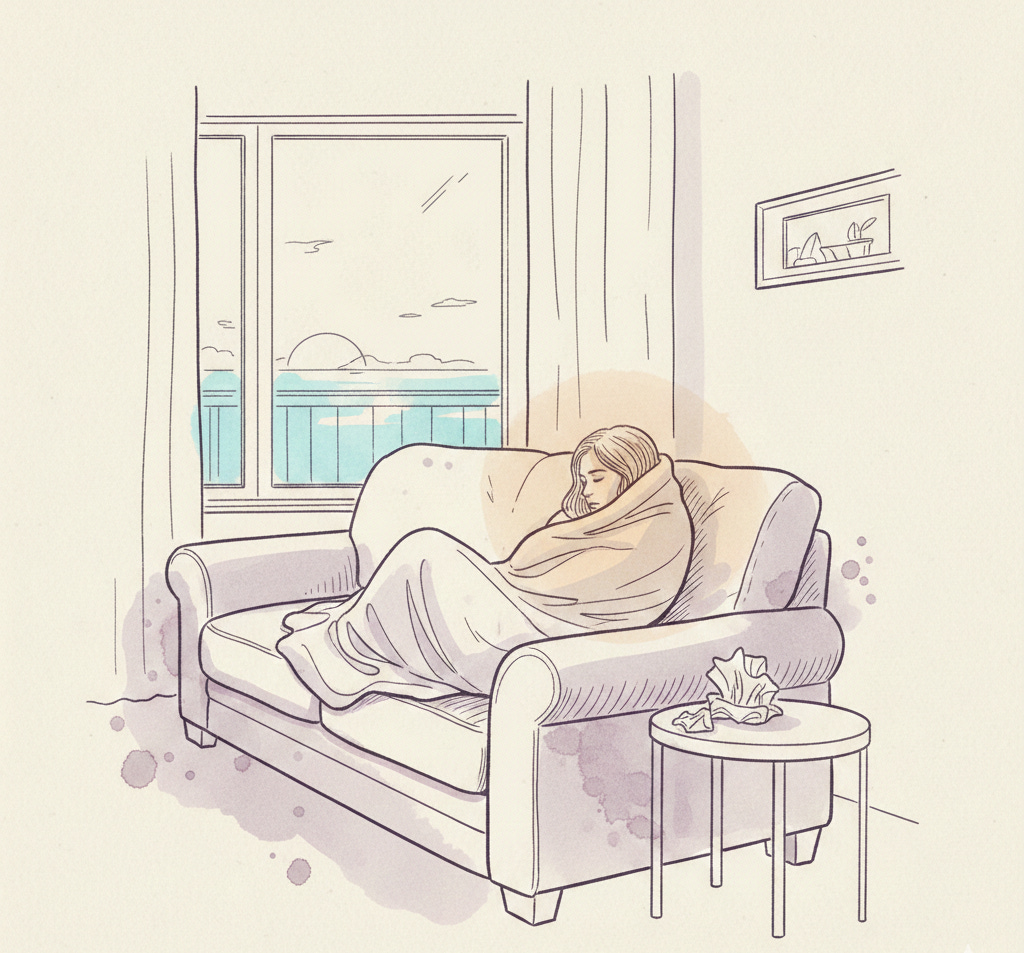
For the first few days, I sat in the corner of the couch snuggled up in a big fluffy blanket. I binged-watched the Nashville TV series for four days straight. I had snacks. I had my tissues. I let myself get emotional whenever it bubbled up.
Those few days were very healing. My brain could turn off from the anxiety and escape to a different world. My body was given time to deal with the cold and built-up stress, quietly preparing to re-engage with the world again.
Anna: Oh my..., that sounds like unpaid severance.
Dallas: I almost had to treat it like that company was now dead to me. My mind could not go there because if it did, it would break me even more. Even now, I don’t like saying the name of the company I used to work for. They don’t exist in my periphery. They’re so far behind me, I refuse to look back.
It’s actually the first time in my life I’ve been able to do that. It feels huge.
I want to pause on the Netflix binge. It gave her something most people could never experience after a collapse: sanctioned uselessness, a small temporary exile from productivity so her nervous system could finally stand down.
When the brain is overwhelmed, it needs a simple input to regulate. Walking. Watching. Reading. Journaling. Not thinking. Dallas was giving her nervous system something it could actually process while the grief moved through her.
The Return
Anna: And after all of that, where are you now? What does your life actually feel like?
Dallas: I don’t have stress following me anymore and I’m so aware of it! I don’t feel tense and my body isn’t reacting. I can breathe deeply without constant anxiety, not waiting for the other shoe to fall.
I get surprised all the time by where I find myself, small moments that sneak up unawares. Everything feels so new and really unfamiliar. My brain and my body had been used to such a tense way of living just to get through each work day, putting a smile on my face while doing whatever it took to keep a good attitude and to keep working hard. It just cost so very much in the end.
My husband now describes me as returning to the person that I was when we first started dating in my early 20s. He says I’m interested in everything and excited about life. I get up earlier than him, eager to sit down and start creating. Ideas are always floating around my head!
We often don’t see ourselves until someone close to us names what they see. Dallas returned to who she was in her early twenties: free, creative, not burdened by everyone else’s expectations. She returned to herself. The longing underneath all of it wasn’t for a new identity, it was for the one she’d learned to shrink.
The Reframe
Anna: You spent many years as an administrator, making systems work for other people. I had this thought while you were talking.
All these administrators, all these jobs, working and supporting other people. These are the people who took complex work and made it usable. Figured out patterns, made systems run.
We have to give it a different title. You were a Human Intelligence, the intelligence in a human body before AI existed.
For decades, people like Dallas were filed under admin while quietly doing what we now glorify as AI work: mapping patterns, translating chaos into usable systems, holding institutional memory no one bothered to record. And now they may be the most useful people to map what work actually matters, and who has been quietly carrying the invisible tasks no one documented.
Dallas: I think that’s what had confused me when I first started learning to use AI. I subscribed to very technical publications and I was overwhelmed thinking I don’t operate like that at all so how could I possibly have anything to offer in this space?
Then, in contrast, I still seemed to get the output I wanted as I became more familiar with AI and many things felt really natural.
When AI analysed my resume in a reverse engineering exercise, patterns emerged I’d never seen before. My skillset became visible for the first time. I’ve been doing this work all along just in a different context. I thought I had little to offer coming from an admin background. Now, I’m watching those skills transfer to AI work better than I ever expected. It’s not the standard 'tech' path or pure prompt engineering, but the way I approach the work matters. I've finally stopped diminishing that. I also know how to adapt and learn fast from years of managers giving sage advice to just make it happen!
The humans didn’t see her value. She used a machine to find the reflection her colleagues and managers never offered. That’s an indictment of how we treat the people who hold our systems together.
The Permission
Anna: What would you tell someone who’s seeing themselves in the stuck version right now?
Dallas: We usually know what’s right for us, but we’re often not willing to face it or accept it. When something becomes inauthentic or a poor fit, we usually do know and our bodies keep the score.
In that moment two years ago, I knew that something was wrong but I did nothing about it that really made a difference, leaving the necessary action far too late.
What would happen if the next time that feeling comes up, it is actually acknowledged and we say okay let’s do something about it this time? There is this feeling that something’s not fitting right. It’s costing mental health, the body is not feeling right. Let’s see what happens if we honor this moment, acknowledge what it is telling us and make a meaningful change?
It might be scary. It might go completely wrong. But, what if it was great? What if you were launching into the best thing that you’ve ever done and you just can’t see it yet?
Be brave and find the courage to try.
Identity
Anna: You said you’re becoming you. But what does that actually mean when you don’t have a job title anymore? When the structure is gone?
Dallas: The journey post-resignation over the last six months has been about discovering my identity. I’ve had to let go of the past, I’ve had to let go of Dallas the dutiful employee and ask who am I now? What matters and what does not matter at all? I’ve had to learn about branding. I’ve had to learn about networking. I’ve had to learn how to write something people want to read. I’m building vibe-coded tools I love to use.
When I break it down, six months has covered substantial ground. It’s okay that right now I don’t know exactly what the clear steps are in front of me.
Each day is about reclaiming another piece of myself, learning, growing and pushing myself to be the most authentic version of me that I possibly can. I owe myself that.
We barely touch identity because it feels so natural that it doesn’t seem to need fixing, until something pushes us outside our most personal and professional boundaries. We leave the job, start the business, build the brand. But underneath all of it is the question: who am I now that the role is gone?
The Language
Anna: During our conversation, I keep hearing maybe I inspire people. What would it take to drop the maybe?
Dallas: Probably therapy!
I actually have a Claude Skill now to remind me not to use diminishing language. If I was to do an analysis on how I used to write four months ago and how I write now, we’d see much of my language has changed.
I used to apologize for everything. Maybe try this. Maybe this will work for you. It was softer. I wrote something a few days ago and had a moment, asking myself who even is this?!
Anna: Who is this?
Dallas: I’m becoming me. This is the journey to becoming me.
Dallas didn’t find a new self. She found the one that had been waiting.
For decades, people like her have been the human intelligence filling the gaps in broken systems, the ones who took the work, figured out the patterns, and knew the mind of the machine before the machine existed.
If you’re in your own two years right now, consider this your call from the future. Not the future where you crawl out at the last possible moment, shaking and furious, but the one where you leave while there is still something left of you.
The version of you who made it through is saying: I know you know.
Stop waiting for proof that it’s really that bad. You don’t have to break first.
Dallas Payne writes about navigating AI transitions and making invisible expertise visible. Building boats while sailing them.
Anna Levitt writes and works with leaders navigating AI adoption from the human side: resistance, identity shifts, judgment under pressure.
 | A guest post by
|